

Robust 3D Perception Under Limited Supervision and Sparse Sensing
Final Oral Examination for Doctor of Philosophy (Computer Science) Aakash Kumar November 2nd, 2026 12:00-01:00pm SPRK 229 Dissertation Three-dimensional perception enables autonomous vehicles, robots, and intelligent environments to understand objects, motion, geometry, and human activity. However, its practical deployment is often constrained by expensive manual annotation, sparse and incomplete geometric measurements, noisy sensor data,…...
Read More
Aligning Visual Generation With Reward Signals
Final Oral Examination for Doctor of Philosophy (Computer Science) Ming Li Monday, October 26, 2026 11:00AM – 12:00PM Teaching Academy, Room TA 0221 Zoom | Meeting ID: 958 1471 4171 Passcode:768955 Dissertation Visual generation systems must follow user intent expressed through prompts, structural controls, editing instructions, and preferences. Optimizing a standard denoising loss alone…...
Read More
From Perception to Reasoning: Towards Adaptive Video Intelligence
Final Oral Examination for Doctor of Philosophy (Computer Science) Shehreen Azad Friday, October 23, 2026 11:00AM – 12:00PM SPRK 229 (Formerly UCF Global) Dissertation Every day, cameras capture an enormous amount of video, from sports broadcasts and movies to security footage, hospital monitoring, traffic cameras, and personal recordings. Far more video is recorded than…...
Read More
From Information Structure to Efficient Adaptation: Principled Foundations for Pretrained Models
Final Oral Examination for Doctor of Philosophy (Computer Science) Md Kowsher Friday, October 16, 2026 11:00AM – 12:00PM Zoom Dissertation Adapting large pretrained models has become central to machine learning in language, vision, and multimodal settings. A single model is trained once and then adjusted for many tasks, such as text understanding, question…...
Read More
IAI Colloquium Series “Eye Tracking in XR: Balancing Privacy and Utility” by Dr. Eakta Jain
Dr. Eakta Jain Tuesday, October 13, 2026 01:00pm – 2:00pm SPRK 229 Abstract Immersive virtual reality and mixed reality (XR) are important emerging technologies for industrial and manufacturing use case contexts. Applications range from simulation and training, human factors assessments to AI based augmentation. Rich user data such as head, body and eye tracking data…...
Read More
IAI Colloquium Series: “AI for Reskilling and Upskilling” by Dr. Ashok Goel
Dr. Ashok Goel Thursday, August 13, 2026 11:00am – 12:00pm SPRK 229 View on YouTube Here Abstract As AI becomes increasingly powerful and ubiquitous, it is disrupting skills and displacing workers. At the National AI Institute for Adult Learning and Online Education (AI-ALOE) sponsored by the United States National Science Foundation, we posit that AI…...
Read More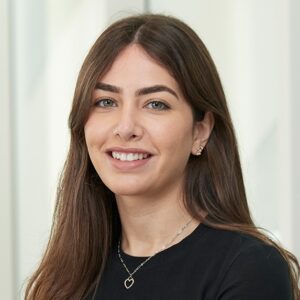
IAI Colloquium Series: “Multimodal AI for Patient-Centered Healthcare Technologies” by Dr. Farah Shamout
Dr. FARAH SHAMOUT Monday, August 10, 2026 1:00 – 2:00pm SPRK 229 (Formerly Global) Abstract Healthcare data is inherently multimodal, generated through heterogeneous and often asynchronous data streams, such as longitudinal electronic health records, medical imaging, and unstructured clinical notes. Recent advances in AI and machine learning have enabled new approaches for integrating these diverse…...
Read More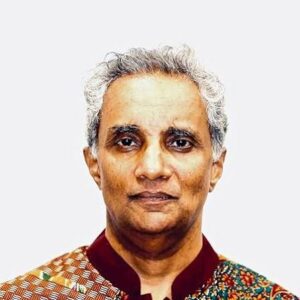
IAI Colloquium Series: “Narrative Intelligence in Large Language Models” by Dr. Inderjeet Mani
Dr. INDERJEET MANI Monday, July 20th, 2026 1:00 – 2:00pm SPRK 229 (Formerly Global) Abstract Story understanding and storytelling have been longstanding problems in AI. Using NarrativeML, a structured representation of narrative elements and relations, I examine how LLMs recover narrative structure, infer causality and motivation, and generate stories from formal representations. The results reveal…...
Read More
Dr. Mohit Bansal: “AI Challenges: Trustworthy Collaboration, World Discovery, and Long-Horizon Memory”
RSVP Here AI Challenges: Trustworthy Collaboration, World Discovery, and Long-Horizon Memory Wednesday, September 16 | 11am | SPRK 101 – 4356 Scorpius St, Orlando, FL 32816 Seating is first come, first served. Join Virtually Speaker: Dr. Mohit Bansal, University of North Carolina Chapel Hill Abstract: In this talk, I will discuss 3…...
Read More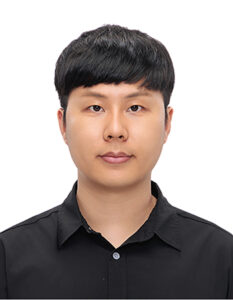
Adaptive and Tuning-free First-Order Methods via Lyapunov Analysis
Dr. Jaewook J. Suh Rice University Tuesday, May 26, 2026 2:00PM – 3:00PM SPRK 229 (Formerly Global) | Zoom Abstract Choosing effective step sizes is a central challenge in first-order optimization methods, particularly for large-scale problems. In this talk, we present a Lyapunov-analysis-based framework for designing adaptive, parameter-free, and line-search-free gradient methods, in which update…...
Read More
Scaling AI for Engineering with Realistic Surrogate Models for High-Fidelity Simulations
Dr. Yadi Caok UC San Diego Thursday, May 28, 2026 2:00PM – 3:00PM SPRK 229 (Formerly Global) | Zoom Abstract Modern science and engineering rely on high-fidelity simulations and experiments that take hours to days per run, creating a fundamental bottleneck for design exploration. Machine-learning surrogates can ease this bottleneck, but most methods face serious…...
Read More
From Models to Systems: The Next Frontier of Generative AI
Dr. Jakub Tomczak Eindhoven University of Technology Tuesday, May 5, 2026 2:00PM – 3:00PM SPRK 229 (Formerly Global) | Zoom Abstract Generative AI is rapidly evolving from isolated models to integrated, system-level solutions. This seminar presents a unifying perspective that connects probabilistic foundations with modern deep generative approaches, including variational autoencoders, diffusion models, and attention-based…...
Read More
Towards Structured Physical AI Models
Dr. Roei Herzig MIT-IBM Watson AI Lab Tuesday, April 14, 2026 2:00PM – 3:00PM SPRK 229 (Formerly Global) | Zoom Abstract Current AI systems can synthesize videos, pass the bar exam, and write code. Despite these advances, robots still struggle with basic physical tasks, like folding a shirt, that humans perform naturally. This disparity stems…...
Read More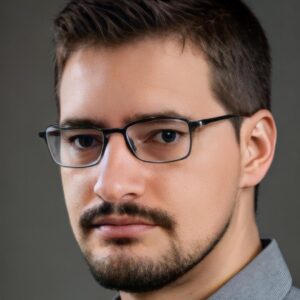
Topological Descriptors in Graph Representation Learning: From Persistent Homology to Scalable Embeddings
Dr. Astrit Tola Florida State University Tuesday, March 3, 2026 1:00PM – 2:00PM SPRK 229 (Formerly Global) | Zoom Abstract The intersection of algebraic topology and machine learning has opened new avenues for understanding the multi-scale structural properties of complex data. While Graph Neural Networks (GNNs) excel at capturing local neighborhood information, they often fail…...
Read More
UCF AI Spring Research Day
Hosted by the UCF Institute of Artificial Intelligence (IAI) + AI for All Initiative The Institute of Artificial Intelligence and the AI for All initiative are pleased to announce UCF AI Spring Research Day which will be held on February 6, 2026. This interdisciplinary event will showcase the variety and impact of researchers engaged…...
Read More
Graph Artificial Intelligence for Multi-Modal Biomedical Data
Dr. Qianqian Song University of Florida Thursday, November 6, 2025 2:00PM – 3:00PM HEC 101A | Zoom Abstract Graph Artificial Intelligence (Graph AI) is reshaping biomedical research by providing a powerful framework to integrate, represent, and analyze complex, heterogeneous, and multi-modal datasets. Unlike traditional learning paradigms, graph-based models explicitly capture the relational and structural dependencies…...
Read More
Exploring Segmentation, Detection and Tracking in Videos
Final Oral Examination for Doctor of Philosophy (Computer Science) Jyoti Kini Friday, October 31, 2025 2:00PM – 3:00PM Research I, 101A Dissertation Autonomous agents rely on robust segmentation, detection, and tracking to perceive, reason about, and act in dynamic environments. These perception capabilities form the core of intelligent systems, from self-driving vehicles navigating urban…...
Read More
Towards Achieving General Video Understanding
Final Oral Examination for Doctor of Philosophy (Computer Science) Rohit Gupta Thursday, October 30, 2025 3:00PM – 4:00PM Global 229 Dissertation Video is now a key medium for learning, communication, and autonomy, so perception systems must recognize fine-grained activities, adapt to new concepts, stay robust under change, and support multiple capabilities. Current methods fall…...
Read More
Towards Structured and Scalable Geospatial Analysis through Dialogue-Centric Agents
Dr. Muhammad Akhtar Munir MBZUAI Thursday, October 16, 2025 1:00PM – 2:00PM HEC 101A | Zoom Abstract Remote sensing systems now collect large amounts of data from satellites, drones, and aerial platforms. However, turning this data into useful insights still depends on slow, expert-driven processes, often built around separate tools, manual scripts, and task-specific steps.…...
Read More
Towards Label-Efficient Approaches for Dense Video Tasks
Final Oral Examination for Doctor of Philosophy (Computer Science) Akash Kumar Monday, October 13, 2025 2:00PM – 3:00PM Dissertation Deep learning has significantly advanced visual understanding tasks like object detection, tracking, and spatio-temporal grounding, benefiting fields such as autonomous vehicles, surveillance systems, and robotics. While large-scale labeled datasets have been crucial to this success,…...
Read More